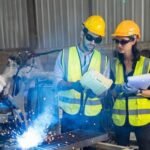
MIG Welders Career in the USA

MIG Welders Career in the USA: A Complete Guide
Introduction to MIG Welding in the USA
Metal Inert Gas (MIG) welding is one of the most widely used welding processes in the United States. Known for its versatility, speed, and ease of use, MIG welding plays a vital role in industries ranging from manufacturing and automotive to construction and aerospace. As the demand for high-quality, durable metal products continues to rise, the need for skilled MIG welders is also growing.
In this article, we’ll explore the career opportunities for MIG welders in the USA, including job responsibilities, salary expectations, qualifications, and how to build a successful welding career.
What Is MIG Welding?
MIG welding, also known as Gas Metal Arc Welding (GMAW), is a process in which a continuous wire electrode is fed through a welding gun and melted to join two pieces of metal. The process uses a shielding gas, such as argon or carbon dioxide, to protect the molten metal from contaminants in the air. MIG welding is popular because it’s faster than other welding methods and can be used on a variety of materials, including steel, aluminum, and stainless steel.
Types of MIG Welding Jobs
MIG welding is used in many industries across the USA, and there are various roles for skilled MIG welders. Some of the common types of MIG welding jobs include:
- Manufacturing Welder: MIG welders in the manufacturing sector create metal products for consumer goods, machinery, and industrial equipment. They work in factories and large manufacturing plants, often producing large quantities of parts.
- Automotive Welder: MIG welders in the automotive industry are responsible for joining parts of vehicles, such as car frames, body panels, and exhaust systems. They often work in auto repair shops, production plants, or with specialty automotive manufacturers.
- Construction Welder: In the construction sector, MIG welders work on building structures such as bridges, buildings, and highways. They weld steel beams, columns, and supports.
- Shipbuilding Welder: MIG welders in the shipbuilding industry work to assemble ships, welding metal plates and structures to create hulls and superstructures.
- Aerospace Welder: Aerospace MIG welders work on the production of aircraft, spacecraft, and parts for the aviation and defense industries. They require a high level of precision due to the complex and critical nature of aerospace components.
Key Responsibilities of a MIG Welder
MIG welders in the USA have various responsibilities depending on the industry they work in, but the core duties typically include:
- Welding Metal Components: Using the MIG welding process to join metal parts together, ensuring a strong and durable weld.
- Reading Blueprints and Schematics: Interpreting technical drawings, blueprints, and work orders to ensure the correct welding procedures and specifications are followed.
- Maintaining Equipment: Ensuring that welding machines, tools, and other equipment are properly maintained and in good working order.
- Ensuring Quality Control: Performing quality checks on welds to ensure they meet the required standards for strength, appearance, and durability.
- Safety: Following safety protocols and guidelines to prevent accidents, including wearing protective gear and ensuring proper ventilation.
Qualifications and Skills Required for MIG Welders
To become a MIG welder in the USA, specific training and certifications are often required. Here’s what you need to get started:
- Welding Certification: While not always mandatory, many employers prefer MIG welders to be certified through the American Welding Society (AWS) or other recognized certification bodies. Certification can demonstrate a welder’s skill and adherence to industry standards.
- High School Diploma or GED: While not strictly necessary, having a high school diploma or GED can make it easier to enter a welding training program and gain employment.
- Welding Training Programs: MIG welders typically undergo formal training in welding techniques, safety, blueprint reading, and material science. Many technical schools and community colleges offer specialized programs for MIG welding.
- Hands-On Experience: Gaining experience through apprenticeships or on-the-job training is essential for becoming a skilled MIG welder. Some employers may offer in-house training for candidates with limited experience.
- Skills:
- Manual Dexterity: MIG welders must have steady hands and good hand-eye coordination to create clean and precise welds.
- Attention to Detail: Welds must meet high standards for strength and appearance, so attention to detail is critical.
- Physical Stamina: MIG welding often involves working in challenging physical environments, requiring stamina to stand for long hours and lift heavy materials.
- Problem-Solving Skills: Welders must troubleshoot issues such as equipment malfunctions or material defects during the job.
Salary Expectations for MIG Welders in the USA
The salary for MIG welders in the USA can vary depending on factors such as location, industry, experience, and certifications. On average, MIG welders earn:
- Entry-Level Welders: $16 – $20 per hour
- Experienced Welders: $20 – $30 per hour
- Senior Welders or Supervisors: $35 – $45 per hour
MIG welders working in specialized industries, such as aerospace or shipbuilding, may earn higher wages due to the complexity and critical nature of the work. Additionally, overtime opportunities and bonuses can further increase earning potential.
Job Prospects and Demand for MIG Welders
MIG welders are in high demand across many industries in the USA. As infrastructure projects, manufacturing, and construction continue to grow, the need for skilled welders remains strong. According to the U.S. Bureau of Labor Statistics, the demand for welders, including MIG welders, is expected to grow at a steady rate over the next decade.
Some of the top industries hiring MIG welders include:
- Construction: With major infrastructure projects, such as bridges, highways, and buildings, there is a constant demand for welders in the construction industry.
- Manufacturing: As manufacturing continues to evolve, companies require skilled MIG welders to produce high-quality metal products.
- Automotive: The automotive industry relies heavily on MIG welding for vehicle assembly and repair.
How to Apply for MIG Welder Jobs
If you’re ready to start your career as a MIG welder, here’s how to get started:
- Complete Welding Training: Enroll in a welding program that offers hands-on experience and industry-recognized certifications.
- Obtain Certification: Consider getting certified through the American Welding Society (AWS) or another recognized body to increase your chances of securing a job.
- Search for Jobs: Look for MIG welding positions on job boards such as Indeed, Monster, and LinkedIn, or check with companies in the construction, automotive, and manufacturing sectors.
- Prepare Your Resume: Highlight your training, certifications, and any relevant experience when applying for MIG welding jobs.
- Network and Apply: Reach out to industry professionals, attend job fairs, and apply to multiple companies to increase your chances of landing an interview.
Conclusion
A career as a MIG welder in the USA offers excellent opportunities for those looking to work in a dynamic and high-demand field. With the right training, certification, and hands-on experience, MIG welders can enjoy job security, competitive salaries, and the potential for career growth. Whether you are interested in working in construction, automotive, or manufacturing, MIG welding is a skill that will remain in demand for years to come.